An international career is not a luxury
Studying an international degree is not a luxury! Do you know how many Spaniards go to study abroad every year? There were more than 120,000 in 2019 and the number is growing. Wouldn’t you like to be one of them?

It’s time to take the leap abroad
Hurry! It’s time to take the leap abroad with Connectors+
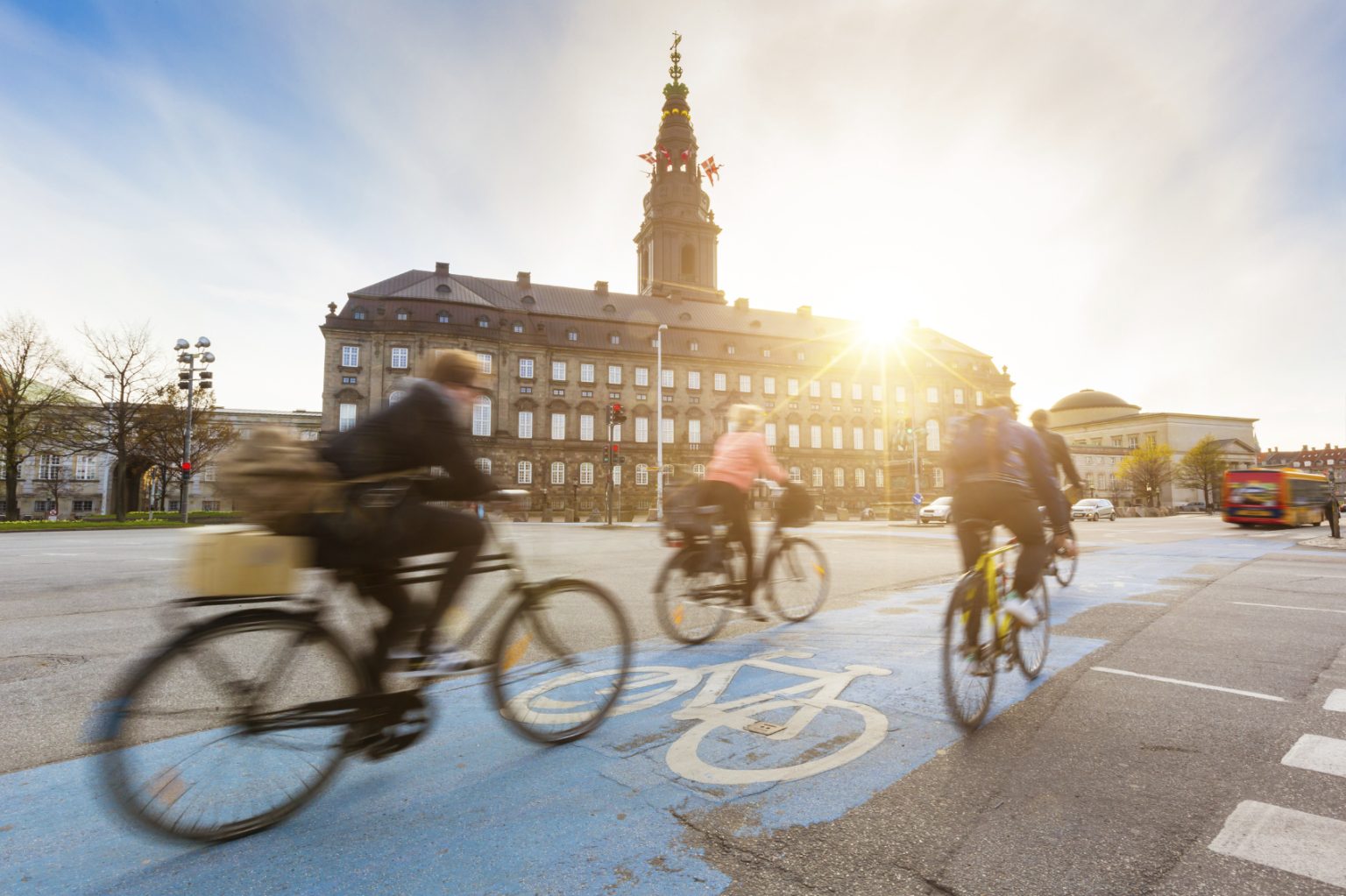
Studying a degree abroad… What about Denmark?
Everyone tells me to study abroad… And what about Denmark? It is possible that those around you keep telling you that it is time to consider studying abroad, outside of Spain, at a European university in English. That doing so will open your mind to other cultures and that you will live new experiences that will make you mature, that you will be independent and you will see the world from another perspective. Well, the truth is that whoever encourages you to do so is quite right. These values, together with a university degree chosen based on your tastes and interests, but also on your abilities, will make you an outstanding professional to work in any country in the world, including your country, Spain. If this idea excites you, we have several options, but today we recommend that you consider studying at a university in Denmark. You won’t be disappointed. Why? Firstly, because the education is of excellent quality (it is ranked fourth in the ranking of the best university systems in the world) and has a very complete offering. Secondly (and most importantly) Danish university education is free for EU citizens. Danish education is 100% state-subsidised. Thirdly, you can access a scholarship designed to support students who study and work at the same time. Higher education at Danish universities is highly focused on employability, which is why all programmes include internships and projects on real problems related to these internships. The AP (Academy Profession Degree) is a degree lasting between 1½ and 2½ years, with a value of 90 to 150 ECTS depending on the field of study. It includes a period of internship in a company, which can be done in Denmark or in another country. The Bachelor’s Degree is a university degree that usually lasts 3 or 4 years depending on the degree, and is equivalent to a university degree in Spain. (180 to 240 ECTS) If a student who has completed an AP degree wishes to continue his or her studies, he or she has the option of equating his or her degree with a degree by completing a Top-Up programme in the same field of study. For example, if you started with an AP degree in Marketing Management (120 ECTS) you can complete it with a Top-Up degree in Sport Management which lasts 1½ years, of which ½ year is an internship (90 ECTS). But it is equally important to point out that you can also access a degree in Denmark from a Vocational Training course by validating subjects. As you can see, the possibilities are numerous and the economic conditions are more than interesting. And Covid is not an impediment? No, it is not. However, until 28/02, it is necessary to show a negative PCR test 24 hours before the flight. It should also be noted that, like the vast majority of EU Member States, Denmark recognises the European Health Insurance Card and therefore grants the right to medical care equivalent to that of Danes. With all this information, we encourage you to call us and we will explain all the details, we will help you choose the most suitable program for what you need and what you want to do and we will resolve your small and large doubts. Don’t delay, registration is open, many of the courses start in March. Call us!

False myths about online teaching
The Covid-19 pandemic has brought about a moment of change at a personal, professional and educational level that has led us to a massive and widespread use of ICT and to change our habits. Companies are adapting to teleworking and education is moving towards online training, which, although it has existed for almost two decades, has always generated some controversy in the sector based on myths that tend to denigrate it and that lack foundation. Personally, due to certain life circumstances that have prevented me from carrying out face-to-face training, I have been involved in the world of virtual education for many years, which has allowed me to pursue a degree in journalism, providing me with the same skills and knowledge as my face-to-face classmates. Today, online training is much more than those massive and easily accessible courses called MOOCs that were flat and not very interactive and which we ended up abandoning in a very high percentage. Today, it is the perfect complement or even the essential substitute for face-to-face training. Myths related to online training 1. Virtual education has no time limits, the student chooses the pace and it does not matter when they finish it This is an absolute fallacy. Online education, like face-to-face education, is marked by defined times and deadlines; it is true that the student has greater flexibility when it comes to organizing his or her time, but the directed activities always follow a schedule. 2. It is a low quality education Statement that is normally based on educational experiences in which the technological factor is implemented in face-to-face teaching without making changes to its methodology. Quality is not associated with the training modality we choose. There are various factors that allow us to rate the quality of a training, such as the tutor’s mastery, the materials, the tools used, the interaction of the students and the relevance of the topics. 3. It does not require the same effort to pass a face-to-face course and it is more boring I can tell you from experience that this is not the case. The role of the student in online training becomes an active role in learning. Participation becomes essential and interaction with the teacher, as well as with classmates, must be greater with more complete and better quality explanations. Through the new tools provided by ICT, video conferences are held, forums are enabled and numerous tasks are programmed for students, most of which tend to be group tasks, encouraging collaborative work. 4. It makes social relationships difficult, it is impersonal We are talking about the existence of a closer relationship with the teacher, and above all, a direct and even personalized one, which leads to a better understanding of the materials and, in many cases, personalized attention. The online medium allows a connection that is not limited only to class hours, that is, thanks to forums, instant messaging or video conferences and tutorials, contact can be immediate and/or direct, but, above all, flexible. “In online training, the student can ask his question in a written forum, expand on it, think about it, document it with links or videos if he wants, and the teacher has many more options and possibilities when it comes to answering than when he is standing in a classroom.” Enrique Dans, Professor of Innovation at IE Business School since 1990. 5. Online education is not the future of education How much has the interpretation of this myth changed in recent times when we have had to adapt to a systematic virtual education… Today’s knowledge society requires people who learn to live and therefore learn to learn. The ability/competence to use, apply and create knowledge is more important than the possession of knowledge as such. This requires changing the forms of instruction from simply delivering knowledge in an expository way to active learning such as problem/outcome-based learning. It is not possible to say that these skills are only developed in a virtual learning environment, nor would it be true to think the opposite. But in terms of efficiency, virtual education actually uses more resources than the simple “chalk and board” technologies traditionally found in a face-to-face classroom. The use of more resources should generate better results. There is no need to be afraid or prejudiced about online education. Education generates knowledge and knowledge generates experience, whatever its origin. In our sector, Spanish and foreign universities and schools are adapting at a forced pace to these new times and offer courses and degrees to be taken entirely online. This allows you to reside in one country and study at a university in another foreign country, which translates into a great advantage at the educational level, since you will have a wide range of possibilities in the international educational field at your fingertips with just a click. Language courses, pioneers in online teaching Perhaps the pioneering formula in this virtual education has been language courses. Nowadays, these have become an exceptional way to prepare for your level exams without having to leave your home. I would like to emphasize the advantage that this has, since not in all cities or regions you have the possibility, for example, to prepare and/or pass the exam you need. This is the case of the IELTS, a type of test required to access universities in the United Kingdom, which you can take thanks to the online training offered by various language schools and academies, which will allow you to prepare for it without any problem from the comfort of your own home. In short, there is always room for learning and there are ways to ensure that, despite the obstacles or difficulties that life imposes on us, we can receive training that is appropriate to our needs. So, don’t think twice and choose the option that suits you, but never give up on your determination to study.

The world doesn’t end in September
Did you know that you have as many opportunities as you want within your reach? The United Kingdom is one of the best options worldwide if you want to study a degree at a prestigious university.

Why learn French? 7 TIPS that will change your view of this language
We live in a globalized world, dominated by English as the universal language. But today, knowing English in addition to your native language is no longer enough. Many jobs require a third language as a determining skill when selecting a candidate. We have expanded our language offering and have included French in our new programs. In this blog we want to encourage you to learn this language, offering you some tips that justify why it is important to master French. Reasons to learn French If we think of our neighbouring country, we think of Paris, l’amour, les croissants… And the fact is that French is the second most chosen language by our students after English, and it is possible that those who do not decide to study it do so because they think it is a language of little use. A serious mistake, let’s see: 1- French is spoken by more than 274 million people in the world (it is the fifth most spoken language), across the 5 continents. It is the official language of no less than 33 countries and there are more than 68 countries that are considered French-speaking. It is also the official language of the UN, the European Union, UNESCO, NATO, the International Olympic Committee and the International Red Cross, among others. French is the language of the three cities that host the European institutions: Strasbourg, Brussels and Luxembourg. After these initial data, do you think that learning French will not open doors for you? 2- We are dealing with the seventh most widely used language on the Internet and in new technologies. The importance of its media extends throughout the world: TV5 Monde has more than 50 million viewers a week around the world. Knowing French allows you to look at the world in a different way. 3- It is a language valued by companies. English is normally essential in the working world, but French is second only to it as the language of choice for organisations (distribution, automobile, luxury, aeronautics…), as it is spoken in countries with a significant economic level such as Canada, Belgium, Switzerland and of course, France. 4- French is the language of culture and the arts. It is the French is the international language of cooking, theatre, visual art, dance and architecture. But certainly of literature and fashion. French literature has been an important influence on the way of writing, style and the general development of literature itself, particularly in the 19th century (Victor Hugo, Marcel Proust, Baudelaire or Jacques Prévert). As for fashion, Paris is the undisputed world capital of fashion and has been home to several fashion giants, such as Chanel, Louis Vuitton and Dior. What better way to enrich your cultural level thanks to this language? 5- Learning French makes it easier to learn other languages. Nearly 50% of all words in the English language have common roots with the French language. Some examples: “war”, “challenge”, “pedigree” and “pride”… Without talking of course about its relationship with other Latin languages. We have many words and grammatical constructions that are almost similar in Spanish, so learning this language will be quite easy for you. 6- The language of love. We take that for granted, don’t we? We have always associated French as a passionate and sensual language. According to certain surveys and polls by the Babbel website, Victor Hugo’s language is ranked as the language of love with 34% of votes, leaving Italian and Spanish behind. It seems that French will not only help you find a job, but it can also help you flirt. Oh la la! 7- This is the advantage that will allow you to study at a French university. French universities are among the most prestigious in the world (Sorbonne, Pierre et Marie Curie University, etc.) as are its grandes écoles (HEC, Polytechnique, ESSEC). Students who are fluent in French can also, under certain conditions, access French government scholarships to undertake a postgraduate degree in France in all disciplines and obtain an internationally recognised diploma. In addition, studying in France is very affordable and there is no need to finance your studies or combine them with a job. However, you can always do so while you study, as paid training during school term is one of the great opportunities offered by the French education system. Hello, my friend! Are you coming to France to learn this language full of opportunities? Are you ready to improve your future with us? Check out our new programs for people over 16 years old. You can go to Lyon, the gastronomic capital of the world, and improve your level of French while living like a true Frenchman.